Stop Testing Button Colors. Fix the Leak Between the Ad and the Sale.
Most CRO advice is a great way to waste three months.
Test the button color. Try a green CTA. Move the trust badges. Swap the hero image. People run these tests, get a 0.4% swing that isn't even statistically real, and call it optimization.
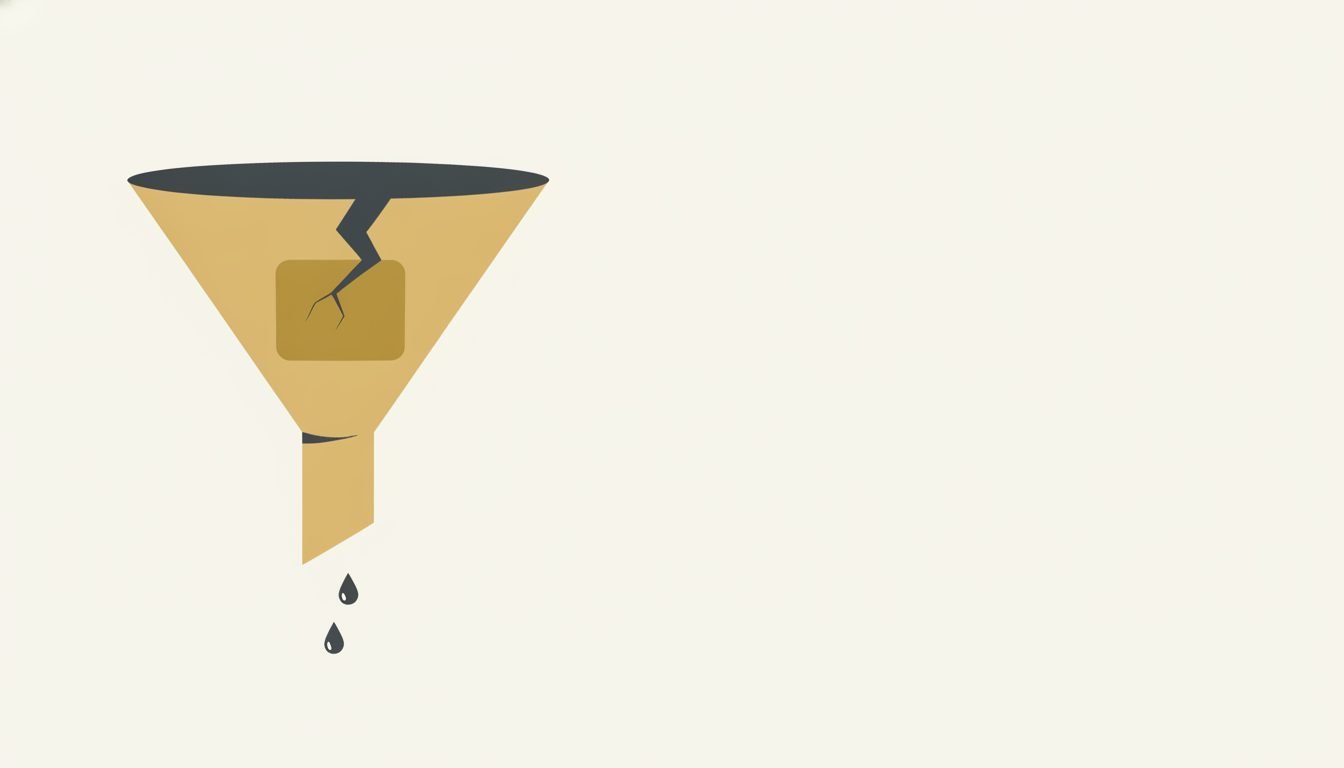
Meanwhile the actual leak, the one draining most of the money, is sitting untouched because it's less fun to fix.

I've run CRO on a lot of funnels, and the biggest lifts almost never came from cosmetics. They came from fixing the order in which you look at things. So let me give you that order.
(Anonymized results below. Relative lifts are real; absolute figures are withheld.)
Cosmetics are the last thing that matters, not the first
Here's the mental model. A funnel is a series of promises and handoffs. Someone sees an ad, clicks, lands, reads, decides, and buys. At every handoff, people leak out.
The leaks are not evenly sized. There's usually one or two that dwarf the rest. And they are almost never the button color. They're structural: a broken promise between the ad and the page, a confusing flow, a lead that doesn't hook.
So testing cosmetics first is like patching pinholes while there's a crack down the middle of the hull. Fix the crack first. Here's the order that actually works.
1. Message match. The single biggest leak.
This is where I start, every time, because it's where most funnels bleed the most.
The ad makes a promise. The page has to keep it, instantly.
If your ad hooks someone on a specific angle, a specific problem, a specific claim, and they land on a page that leads with something else, you've broken the promise in the first two seconds. They don't consciously think "message mismatch." They just feel a tiny "this isn't what I clicked for" and they're gone.
On one funnel, matching the landing page to the exact angle of the ad, so the page picked up the same thought the ad started, lifted conversion 55% and dropped CPA 10%. No new offer. No redesign. Just closing the gap between what the ad said and what the page said.
Before you touch anything else, click your own ad and land on your own page. Does the page continue the ad's sentence, or start a new one? If it's a new one, you found your biggest leak.
2. Funnel logic and flow. Remove the friction between the click and the buy.
Once the promise matches, look at the path. How many steps, in what order, with how much friction?
Most funnels have steps that exist for the brand's convenience, not the customer's. Extra pages, redundant asks, a flow that made sense to whoever built it and to nobody else.
Condensing and re-sequencing a funnel's flow, so the path from click to purchase was shorter and more obvious, lifted frontend conversion ~49% on one build. That's not a copy change. That's removing steps that were quietly costing you buyers.
Map the real path: visits, product views, add to cart, checkout started, purchase. Find the worst drop-off in that chain. That's the step to fix, not whatever's easiest.
3. The lead and the copy. Fix what they read first.
Now the words, and specifically the first words. The lead of a sales page or a VSL does most of the work. Get the opening wrong and nothing after it gets read.
Rewriting the lead on one funnel, reframing the very first thing the prospect encountered, lifted frontend conversion ~41%. Same offer, same everything else. The opening just finally spoke to the right problem in the right order.
And copy isn't only writing. Sometimes it's insight. On another funnel, a single sharper read of the audience, a signal about who they really were and what they actually wanted, lifted conversion ~56%. The page didn't get prettier. It got truer.
4. Now, and only now, the cosmetics.
Once the promise matches, the flow is clean, and the copy speaks to the real problem, then you can fuss over the button, the badges, the hero image. At that point those tests might buy you a point or two.
But you earned the right to test cosmetics by fixing the structure first. Do it in the other order and you'll spend your best months chasing rounding errors.
How to find your biggest leak in twenty minutes
You don't need a fancy tool for this. You need to look at the funnel honestly.
Pull the numbers for each step: ad clicks or landing-page views, product views, add to carts, checkouts started, purchases. Write the conversion rate between each step. Now find the ugliest drop in the chain. That's your leak. That's where the money is.
Then do the human version. Click your own ad like a stranger would. Land on the page and read it cold. Does it continue the exact thought the ad started, or change the subject? Keep going. Try to buy. Count the steps. Notice every place you hesitate, get confused, or have to think. Those hesitations are where real people leave.
Between the numbers and the walk-through, the biggest leak usually becomes obvious in one sitting. And nine times out of ten it's structural, a broken promise or a clumsy step, not a cosmetic detail.
Most teams never do this. They jump straight to opinions about the design. Twenty minutes of actually mapping the funnel beats a month of guessing about buttons.
The order, in one list
- Message match. Does the page keep the ad's promise, instantly?
- Funnel logic. Is the path from click to buy short and obvious? Where's the worst drop?
- Lead and copy. Do the first words speak to the real problem? Is the audience insight actually right?
- Cosmetics. Everything else, last.
Every big CRO win I've had lived in the first three. The fourth is where careers go to feel busy.
The takeaway
CRO isn't about testing more things. It's about testing the right things in the right order.
Map the funnel. Find the biggest leak, which is usually a broken promise between the ad and the page. Fix that. Then the flow. Then the lead. Then argue about buttons.
Do it that way and you'll see 40, 50, 55% swings instead of the 0.4% ones. Same traffic, same spend. You just stopped patching pinholes and fixed the crack.
If your ads are the thing that stopped working, that's a different problem, and it's usually the creative, not the page.
Want the full teardown behind numbers like these? The complete case studies live in my private library.
Request case-study access