The Power of Affinity: How Inclusive Creative Lifted Conversions 13%
When it comes to optimizing funnels to allow for scale, a ton of things can be done. And most of them can produce a nice lift in performance.
Depending on the type of funnel, that could mean increasing conversion rates, reducing the cost per booked call, cost per registration, increasing AOV, reducing cost per purchase, and so on.
And because so much can be done, it is common to get overwhelmed and barely do anything.
In this article, I am gonna share with you a science-based, quick little trick that allowed me to boost conversion on a low-ticket funnel by 13%.
Without rewriting the sales page. Without rewriting the ads. And I certainly did not touch the offer.
I used what I call the Power of Affinity.
How the Power of Affinity boosts conversions
The funnel I am referring to was promoting a low-ticket product targeting soon-to-be moms. Cool offer. Strong copy. Nice design.
As I was analyzing the sales page, something stood out to me: all the babies on the page were white babies.
Nothing wrong with that on the surface. But here is the kicker.
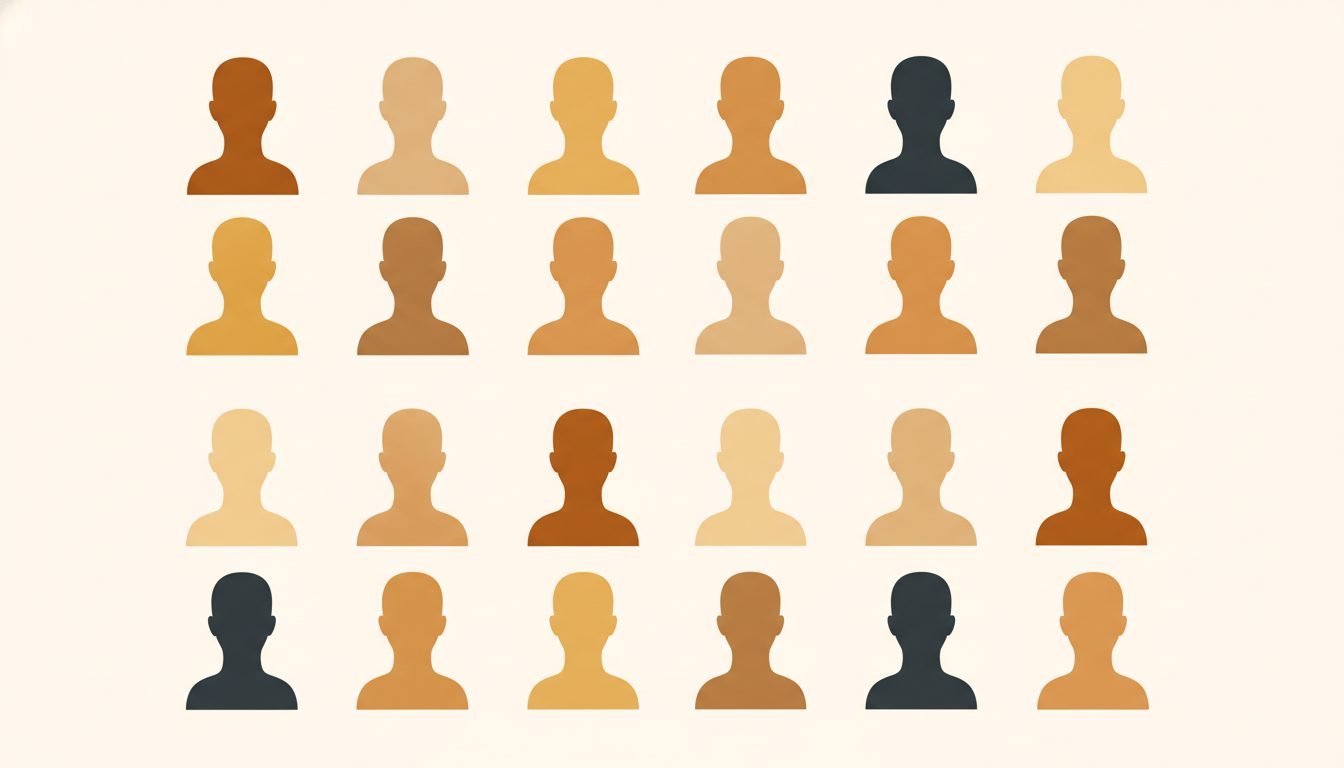
If you are doing any kind of advertising, chances are different people from different ethnicities will see your ad. And unless you strategically want to target only one specific ethnicity, your marketing should be as INCLUSIVE (ethnicity-wise) as possible.
Because on a subconscious level, every person is likely to feel more affinity and trust toward the person who looks like them.
If you live in a "politically correct" world, and you wanna believe otherwise, you are free to do so. But in the real world, this is a fact.
The neuroscience behind it
Several neuroscientific studies have explored the neural mechanisms underlying in-group bias and how they relate to trust and affinity with individuals from the same ethnicity.
One prominent study is the research by Cikara et al. (2011), "The neural substrates of ingroup bias: A functional magnetic resonance imaging investigation." The researchers investigated the neural processes associated with in-group bias, and how that processing relates to trust and affinity.
Here are the key findings:
- When individuals viewed faces of their own racial or ethnic group (in-group), specific reward-related brain regions, like the ventral striatum, showed increased activity.
- That heightened activation was associated with higher levels of trust and affinity for individuals from the same group.
- When participants viewed faces from a different group (out-group), regions associated with threat detection and cognitive control showed greater activity.
With this in mind, here is what I did to boost the conversion rate of that sales page. I simply added the following baby photos:
- An Asian baby
- A Black baby
- An Indian baby
- A Hispanic baby
I did not add any copy. I did not add any explanation. I just replaced some of the white baby photos with the photos above.
Conversions went up by 13%.
That is the power of affinity.
Use the Power of Affinity in your ads and UGC
Affinity is not limited to the sales page. You can also use it in your ads.
Let's say you have a female-specific product, and you have a UGC that is performing well featuring a white woman. Take that same script and style, and get women from other ethnicities to shoot the same UGC.
I do this all the time, and it works incredibly well, especially for products that have a broad appeal.
It is easy to get more winning ads into the account. And it allows you to iterate on what is working and convert customers you would have probably not converted otherwise.
Conclusion
The power of affinity is real. And its impact is even more tangible in cosmopolitan areas.
But in a world of political correctness, it is easy to overlook the power of affinity and assume everybody responds to the same thing.
I will tell you this: diversity is real. And different ethnic groups respond to different things. They are not carbon copies of each other. The sooner you acknowledge this fact and use it to your advantage, the better your results will get.
Also, affinity is not limited to ethnicity. Try testing different age groups in your UGCs and landing pages. It will allow you to touch demographics you would not have reached otherwise.
Want the full teardown behind numbers like these? The complete case studies live in my private library.
Request case-study access