I Built an AI Creative Department. Not Another Pile of Prompts.
Everyone's experimenting with AI right now. Almost nobody is building with it.
There's a difference, and it's the whole game.
The experimenter has a doc full of prompts. They paste one in, get a caption or a concept, tweak it by hand, and move on to the next thing. It feels productive. It's really just a slightly faster intern who forgets everything the moment you close the tab.
I went a different way. I built AI into the creative operation itself. Not a prompt library. A department. A set of specialized agents that research, analyze, strategize, write, and produce, running on a schedule, with defined inputs and defined outputs.

This is what that actually means, why I did it, and what I learned about where AI helps and where it quietly wrecks you.
The leverage is in the system, not the prompt
Here's the mistake almost everyone makes. They treat AI like a genie. One big prompt, one big wish, and out comes marketing.
It doesn't work, and the reason is simple. A prompt is a one-off. A good one saves you ten minutes on a task you were going to do anyway. It doesn't compound. It doesn't remember. It doesn't run tomorrow unless you sit there and run it.
A system is different. A system is a machine with parts. It runs every week whether you're inspired or not, whether you're on a beach or asleep. That's where leverage actually lives.
And building the system comes down to two ideas.
Contextualize everything. A generic model gives you generic output. The same model, fed the offer, the market, the avatar, the objections, the winners, and the losers, gives you something sharp. Context is the entire difference between "write me an ad" and an angle that sounds like it came from someone who has actually sold this thing. Most people never do the work of loading that context. So they get slop and blame the AI.
Break your brain into mini-brains. When you sit down to make creative, your brain quietly switches between a dozen different jobs. Researcher. Analyst. Strategist. Copywriter. Producer. Editor. You do all of them, badly, at the same time. A real creative team doesn't work that way. It has specialists, and each one is great at a narrow job.
So I stopped asking one model to be all of those people at once. I split the work into skills: a set of narrow, contextualized specialists, each with a single job and its own instructions. One brain, broken into many smaller brains that are each very good at one thing and hand off cleanly to the next.
That's the unlock. Not a clever prompt. An org chart.
What the department actually looks like
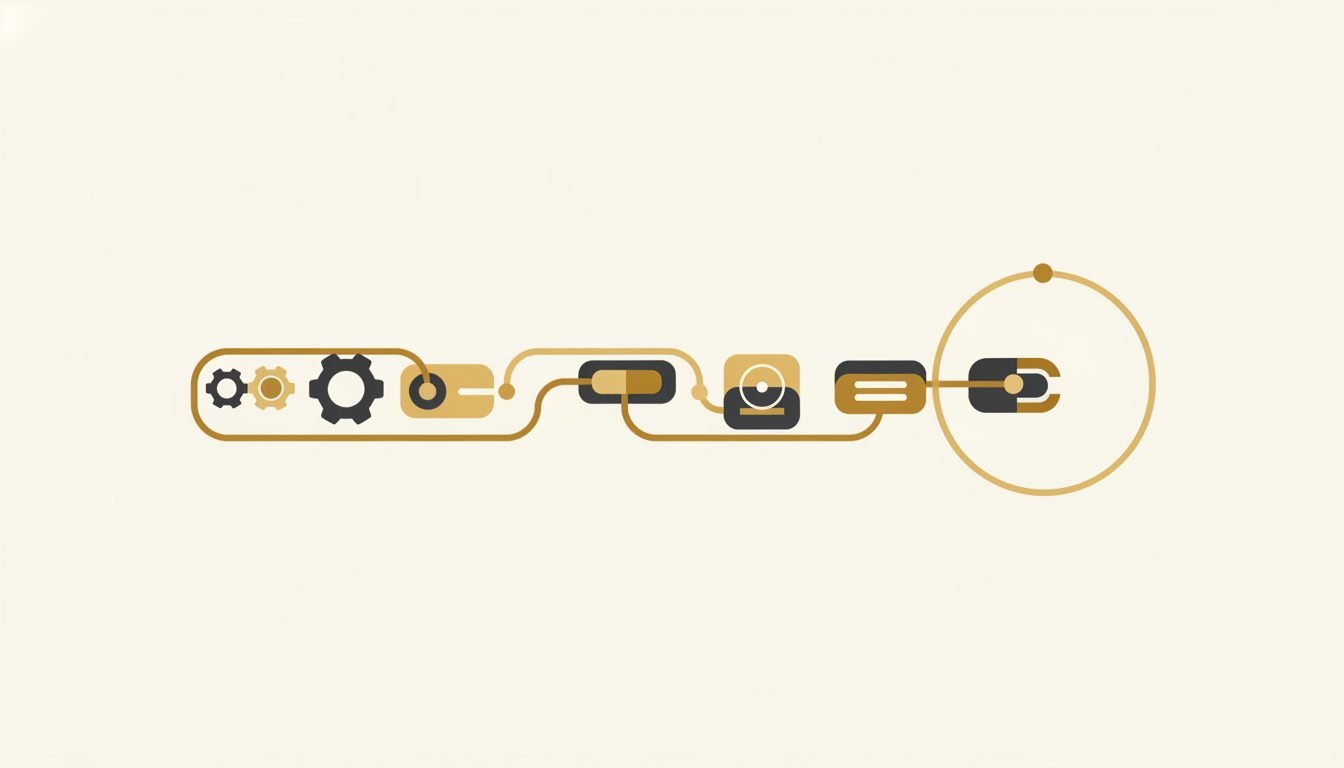
Picture an assembly line. Deliberately boring. Each station does one thing and passes the work forward.
Research. It starts with the customer, not the product. Voice of customer from real replies and reviews. Competitor intelligence on what's running and working in the market. Market research on the avatar, the pains, the desires, the objections. This is the raw material. Everything downstream is only as good as this.
Analysis. Then it breaks down the winners. Why is this ad working? What's the hook doing, what belief is it attacking, what's the mechanism? And just as important, why did that one die? Winning creative is not magic. It's patterns, and patterns can be named.
Strategy. Now the angles. This is where research and analysis collide into "here is a new way in." New angles, new avatars, new mechanisms. Not "make it pop." A specific bet about what a specific person needs to believe to buy.
Production. The angles become concepts, then scripts, then actual creative variations, generated through APIs, at volume. This is the part that used to be the bottleneck. It isn't anymore.
Feedback. Then the performance data comes back in and feeds the next round. What scaled, what stalled, what to double down on, what to kill. The line doesn't stop. It loops.
One more distinction that matters, and that most people flatten: there are two lanes. Net-new and iterations.
Net-new is inventing fresh angles and concepts from scratch. High upside, high risk, because you're making bets. Iterations are constrained variations of things already winning. Lower risk, because the system is boxed in and can't wander far. A real department runs both lanes on purpose, and treats them completely differently. Most people run everything like it's net-new and wonder why so much of it misses.
Why I built it instead of just prompting
The honest reason: I needed to industrialize the operation.
Prompting in a chat window is fine when you're making a handful of ads for one offer. It falls apart the instant you're running multiple offers, in multiple lanes, and you need a predictable amount of good creative every single week.
You cannot run an operation on inspiration. Inspiration doesn't show up on a schedule. Output has to.
So the system is built the way you'd build a factory. Defined inputs go in: the data, the brief, the constraints. Defined outputs come out: a set number of concepts and variations, per offer, per lane, per week. On a schedule, not "when someone feels like it."
That's the part that sounds unsexy and is actually the whole point. The value isn't that AI makes cool things. It's that AI makes the right things, reliably, on time, across every offer at once, so the humans are freed up for the work that genuinely needs a human. Predictable volume is a competitive advantage. Most teams can't produce it. A system can.
The slop problem nobody warns you about
Now the part nobody selling you an "AI marketing course" wants to say out loud.
AI is not the be-all and end-all. And the biggest thing it made easy is not good marketing. It's slop.
Slop at a scale you have never seen. You can generate a thousand ads before lunch. And that is exactly the trap, because you cannot review a thousand ads before lunch. Volume feels like progress. Then you look up and realize you've produced a mountain of mediocre creative so tall you can't even inspect it properly, let alone tell what's good.
This is where most "AI creative" operations quietly die. They optimize for output and forget that output was never the constraint. Judgment is.
So in my system, the operator's tests and quality checks are not optional. They are the most important part. The AI speeds up research and production. It does not get to decide what ships. Every batch runs through checks and clear verdicts before anything goes near an ad account: promote it, revise it, or kill it.
Take that gate away and you don't have an AI department. You have a slop factory with excellent uptime.
The mental model I'd give you: AI removed the cost of producing creative. It did nothing about the cost of judging it. If anything it made judgment more expensive, because now there's ten times more to judge. Build for that reality or drown in it.
Where AI ends and you begin
So what's actually left for the humans? The most valuable parts.
Taste. Knowing that this one, out of forty, is the one. That's not a prompt. That's pattern recognition earned by spending real money and watching what happens.
Story. The system can assemble a concept. It struggles to feel a story, the specific emotional truth that makes a stranger stop scrolling. Humans still carry that.
The real trigger. AI is good at finding an insight in the data. It is not reliably good at finding the real purchase trigger, the actual reason someone bought. It will confidently build a hypothesis on a surface correlation, and a whole production batch downstream will be off by a mile. Catching that is a human job. (That failure mode deserves its own piece, and it'll get one.)
The final call. Someone still has to say "no, not that one." The system's job is to give that person a much better set of options to choose from, faster. It is not to take the choice away.
The goal was never to replace creative people. It's to hand them a better starting point: a research engine that reads the market faster than any human can, production cycles that never wait on capacity, and decisions grounded in what the data actually says. They spend less time digging and more time deciding. That's the trade.
If you want to build your own
You don't need my exact stack. You need the principles.
- Think in skills, not prompts. Split the work into narrow specialists. One job each. Compose them into a line.
- Contextualize everything. Feed each skill the offer, the market, the avatar, and what's already winning. Context is the difference between generic and sharp.
- Define your inputs and outputs. Decide exactly what goes in and what must come out, per offer, per lane, per week. Then run it on a schedule.
- Separate net-new from iterations. Let the system take bets in one lane and stay boxed in the other. Never treat them the same.
- Put a human gate on the output. Tests and QC are the point, not an afterthought. Promote, revise, or kill. No batch ships unreviewed.
- Close the loop. Feed performance back in so every round is smarter than the last.
Do that and you'll have something that compounds. Skip any of it and you'll have a very fast way to make things nobody should see.
The takeaway
Stop collecting prompts. Start building the system.
The brands that win with AI won't be the ones with the cleverest prompt in their swipe file. They'll be the ones who turned it into a real function of the business: contextualized, industrialized, on a schedule, with guardrails and a human who still says "no, not that one."
That's the difference between using AI and building with it. And it's a much bigger difference than the hype makes it sound.
Want the full teardown behind numbers like these? The complete case studies live in my private library.
Request case-study access